
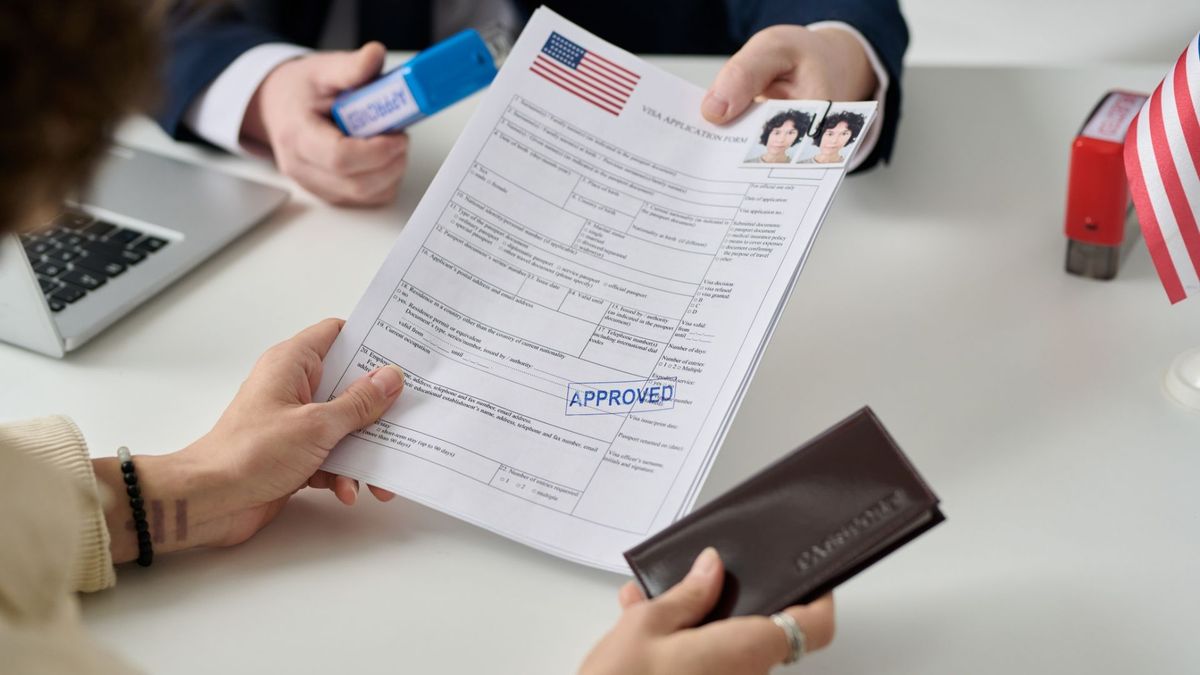
USCIS New Green Card Policy 2026: What the Adjustment of Status Memo Actually Means for Your Case
On May 21, 2026, USCIS released a policy memo that sent shockwaves through immigrant communities. TikTok videos claimed green cards were ending. Reddit threads erupted in panic. Group chats lit up at midnight. Here is what the memo actually says, who it affects, and — most importantly — what you should and should not do right now.
Our content is researched by immigration educators with experience helping naturalization applicants prepare for their interviews.
Editorial Standards: All content is based on official USCIS materials and reviewed for accuracy. Learn more about our team
The Bottom Line
USCIS Policy Memorandum PM-602-0199 does not eliminate adjustment of status or the ability to file Form I-485. It instructs USCIS officers to treat in-country green card processing as a discretionary privilege that requires active justification — not an automatic entitlement. Marriage-based applicants with clean records are in the strongest position. The memo is guidance, not new law, and many immigration attorneys anticipate legal challenges.
What the USCIS Memo Actually Says
On May 21, 2026, USCIS issued Policy Memorandum PM-602-0199, titled "Adjustment of Status is a Matter of Discretion and Administrative Grace, and an Extraordinary Relief that Permits Applicants to Dispense with the Ordinary Consular Visa Process."
That title is long and intimidating. Let us strip away the legal language and get to what matters.
The memo instructs USCIS officers to stop treating adjustment of status — the process of getting a green card while remaining inside the United States — as a routine, almost-automatic process. Instead, officers are told to treat it as a privilege that requires active justification from the applicant.
Three key things the memo does:
- Reframes adjustment of status as "extraordinary relief" — meaning it is presented as an exception to the normal immigration process, not the default path.
- Tells officers to weigh positive and negative factors — even if an applicant meets every legal requirement, the officer must now decide whether the person deserves approval as a matter of discretion.
- Identifies specific negative factors — including failure to maintain status, failure to depart when expected, conduct inconsistent with your visa purpose, and choosing adjustment when consular processing was available.
Critically, the memo does not change any law. It does not repeal INA Section 245, which allows eligible immigrants to apply for adjustment of status. It does not create new eligibility requirements. What it does is change the attitude USCIS officers are instructed to bring to each case.
Important distinction
The memo is internal guidance for USCIS officers. It is not a regulation, not a statute, and it did not go through the formal notice-and-comment rulemaking process. This matters because it means the memo is more vulnerable to legal challenges than an actual law would be.
Why This Memo Caused Panic Online
If you found this article because you saw something terrifying on TikTok, a Reddit thread, or a WhatsApp forward — you are not alone. Within hours of the memo\'s release, immigrant communities across social media were flooded with alarming claims.
The panic was predictable, and it was partly USCIS\'s own doing. The agency\'s press release used the phrase "extraordinary circumstances" — language that sounds like you need to prove your case is one in a million. But the actual memo text is more nuanced than that press release suggested. The memo talks about adjustment being an "extraordinary relief," not requiring "extraordinary circumstances" from every applicant.
That gap between the headline and the fine print created a perfect storm of misunderstanding. Immigration attorneys scrambled to clarify. TikTok creators — some with no legal training — posted reaction videos filled with speculation. Group chats among immigrants lit up with the worst-case interpretations.
Here is the honest truth: this memo is a significant policy shift. It is not nothing. But it is also not the end of green cards, the end of adjustment of status, or a reason to make panicked decisions at 2 AM. The most dangerous thing you can do right now is act on fear instead of facts.
What "Extraordinary Relief" Actually Means in Plain English
When most people hear "extraordinary," they think of astronauts and Nobel Prize winners. That is not what this memo means.
In immigration law, calling something "extraordinary relief" is a way of saying: this is not the normal process. The "normal" process, according to USCIS, is consular processing — where you leave the United States, attend an interview at a U.S. Embassy or Consulate abroad, and receive your immigrant visa there. Adjustment of status lets you skip that departure. That skip is what USCIS is calling "extraordinary."
Think of it this way: if buying a house normally requires going to a bank, then refinancing from your couch is a convenience — an exception to the standard process. USCIS is arguing that adjusting status inside the U.S. is a similar kind of convenience, and that applicants should demonstrate they deserve that convenience.
This framing is legally debatable. Congress specifically created the adjustment of status process in INA Section 245 precisely because it recognized that requiring everyone to leave the country was impractical. Many immigration attorneys argue that by penalizing people for using a process Congress intentionally created, USCIS is contradicting congressional intent.
But for now, this is the guidance USCIS officers are working with. And understanding what it means — without exaggerating it — is the first step to navigating it.
Why Adjustment of Status Has Always Been Discretionary
Here is something most people do not realize: adjustment of status has always been discretionary. This is not new. The Supreme Court confirmed it in Patel v. Garland (2022), and the Board of Immigration Appeals established it decades ago in Matter of Blas (1974).
What changed is not the legal reality — it is the emphasis. For years, USCIS officers treated adjustment applications relatively straightforwardly: if you met the legal requirements, you were usually approved. The discretionary analysis existed on paper but rarely resulted in denials for otherwise-eligible applicants with clean records.
PM-602-0199 is telling officers: stop coasting. Start using your discretion actively. Treat each case as one where you have to affirmatively decide whether this person warrants the privilege of adjusting status inside the U.S.
The legal architecture has not changed. The culture inside USCIS offices is what this memo is trying to change. And that cultural shift — depending on how individual officers implement it — could range from barely noticeable to quite significant.
Practice the Real Interview Format
Our simulation mode stops after 6 correct answers (PASS) or 5 wrong answers (FAIL) — exactly like USCIS.
Does This Affect Pending I-485 Cases?
Direct Answer
Yes, it can. The memo does not include a grandfathering provision, meaning it applies to all pending applications that have not yet been decided — not just new filings.
If your I-485 is already pending, the officer who picks up your case will now be operating under this new guidance. That does not mean your case will automatically be denied. It means the officer has been told to look at your case through a more scrutinizing lens.
For most applicants with straightforward cases — a valid petition, clean immigration history, no status violations, and strong ties to the United States — the practical impact may be minimal. Many attorneys believe straightforward marriage-based cases remain among the least likely to face major disruption under this memo.
Where the risk increases is for applicants who have any complicating factors: a gap in status, a period of unauthorized employment, a late filing, an entry on a single-intent visa that later shifted to an immigrant petition. These are the cases where the new guidance gives officers more room — and more institutional encouragement — to scrutinize.
What to expect: Immigration attorneys anticipate an increase in Requests for Evidence (RFEs) and Notices of Intent to Deny (NOIDs) that specifically ask applicants to explain why they merit a favorable exercise of discretion. If you receive one of these, do not panic. It is a request, not a denial. Respond thoroughly, preferably with an attorney\'s help.
Are Marriage-Based Green Cards Affected?
Good news: Immediate relatives of U.S. citizens — including spouses — remain in the strongest category. The law provides special protections for these cases, and most straightforward marriage-based applications should continue to move forward.
If you are married to a U.S. citizen, filed your I-485 with a clean record, maintained lawful status, and have a genuine marriage — take a breath. You are in the category least likely to be affected by this memo.
That said, marriage-based cases with complications could see more scrutiny. Officers may look more closely at:
- Cases where the foreign spouse entered on a tourist visa (B-1/B-2) and then filed for adjustment shortly after — which can raise questions about preconceived immigrant intent
- Cases involving prior immigration violations, such as overstays or unauthorized employment
- Cases where the petitioning spouse has previously sponsored other partners (which may trigger fraud concerns)
- Cases with large age gaps, language barriers, or limited evidence of shared life — red flags that existed before this memo but may now receive more attention
For the vast majority of genuine marriage cases, the path forward remains clear. Prepare your documentation thoroughly, bring evidence of your shared life, and be truthful at your interview. These basics have not changed.
Does This Affect Cuban Adjustment Act Applicants?
The Cuban Adjustment Act (CAA) occupies a unique space in immigration law. Under the CAA, Cuban nationals who have been physically present in the United States for at least one year after admission or parole can apply for adjustment of status to permanent residence.
Here is the key legal nuance: CAA cases have historically been treated differently from many standard adjustment cases. Many practitioners view Cuban Adjustment Act applications as less discretion-heavy, meaning the kind of heightened balancing test described in PM-602-0199 may not apply to CAA cases in the same way.
However — and this is where it gets complicated — the memo\'s broad language about scrutiny and documentation has created uncertainty. Some attorneys worry that individual officers, unfamiliar with the nuances of CAA cases, may still apply the heightened scrutiny framework inappropriately.
If you are a Cuban national with a pending CAA case, the legal protections should insulate you from the worst effects of this memo. But "should" and "will" are different things in immigration. If you receive an RFE or NOID that references discretionary factors, consult an attorney who understands Cuban adjustment specifically.
En español: Si eres cubano y tienes un caso pendiente bajo la Ley de Ajuste Cubano, tus protecciones legales siguen vigentes. Pero si recibes una solicitud de evidencia que menciona factores de discreción, consulta con un abogado de inmigración que conozca tu situación.
What This Means for Parolees
Parolees — individuals allowed into the United States on a temporary, case-by-case basis — face a particular challenge under this memo. The document explicitly identifies "failure to depart the United States as expected upon the expiration of a nonimmigrant stay" as a negative factor.
For many parolees, the entire purpose of their parole was humanitarian — fleeing danger, reuniting with family, or responding to an emergency. The idea that staying in the U.S. to seek permanent residence could be held against them feels deeply unfair. And many attorneys agree.
But the memo does not make exceptions based on how someone feels about it. What it does is give officers a framework where the reason you are adjusting rather than consular processing becomes a question you may need to answer.
If you are a parolee seeking adjustment: document everything. Your reasons for being in the U.S. Your ties to the community. Your employment, tax filings, family connections, and any hardship you would face if forced to leave. Building a strong "discretionary evidence package" — something that was not standard practice before this memo — is now essential for your case.
H-1B, L-1, and Dual Intent Visa Holders
If you hold an H-1B, L-1, or O-1 visa, you are in a somewhat better position — but not an invulnerable one.
These visas carry what is called "dual intent" — meaning the law explicitly recognizes that you can hold temporary worker status while simultaneously pursuing a green card. Unlike a tourist on a B-2 visa, your intent to become a permanent resident is legally acknowledged and expected.
The memo acknowledges this. It does not treat H-1B holders the same way it treats, say, an F-1 student who pivots from studying to seeking a green card. But — and this is the catch that many blogs gloss over — the memo explicitly states that holding a dual-intent visa "is not sufficient, on its own" to guarantee a favorable exercise of discretion.
Translation: your H-1B status gets you through the door, but you still need to present evidence of positive equities — your economic contributions, tax compliance, community involvement, family ties — to close the deal.
For most H-1B workers with clean records and strong employment histories, the practical risk remains low. But passive reliance on dual intent alone is no longer a safe strategy. Document your contributions proactively.
Consular Processing: Why USCIS Wants You to Leave — and Why That Can Backfire
One of the most significant aspects of PM-602-0199 is its explicit preference for consular processing — the pathway where you leave the United States to attend a visa interview at a U.S. Embassy or Consulate abroad.
The memo frames this as the "ordinary" and preferred route. But what the memo does not say — and what you absolutely need to know — is that leaving the United States can be extremely dangerous for certain applicants.
Critical Warning
If you have accrued unlawful presence in the United States (stayed beyond your authorized period), departing the country can trigger the 3-year or 10-year re-entry bars under INA Section 212(a)(9)(B). This means you could leave for a consular interview and then be barred from returning for years. Do NOT leave the country without consulting an immigration attorney first.
This is the irony — perhaps the cruelty — of the memo\'s emphasis on consular processing. For many immigrants, especially those with any unlawful presence, the "ordinary" path USCIS wants them to take is actually the most dangerous one. Adjustment of status exists precisely because Congress recognized that forcing everyone to leave could trap them outside the country.
If anyone — including a USCIS officer — suggests you should have pursued consular processing, and you had legal reasons for not doing so (unlawful presence bars, country conditions, medical emergencies, family hardship), document those reasons thoroughly. They are your strongest argument for why adjustment was the right choice for your case.
How Officers May Use Discretion Differently Now
Under PM-602-0199, officers are instructed to weigh positive and negative factors in every adjustment case. The memo requires a written analysis for denials, explaining why the negatives outweigh the positives.
Factors That May Count Against You
- Failure to maintain lawful nonimmigrant status
- Overstaying your authorized period of admission
- Unauthorized employment
- Conduct inconsistent with the purpose of your visa (e.g., entering as a tourist with the intent to apply for a green card)
- Choosing adjustment when consular processing was a viable option
- Any history of fraud or misrepresentation to government agencies
- Criminal history (this was already a factor, but now carries even more weight)
Factors That May Help Your Case
- Strong family ties to U.S. citizens or permanent residents
- Long-term lawful presence in the United States
- Tax compliance — filing all required returns and paying obligations
- Employment history and economic contributions
- Community involvement (volunteering, church membership, civic engagement)
- Evidence of good moral character
- Hardship that would result from leaving the U.S. (medical conditions, children in school, elderly dependents)
- U.S. citizen children who depend on you
One critical change: the memo states that the absence of negative factors is not enough to earn approval. Previously, a clean record was essentially sufficient. Now, officers are instructed that you must affirmatively demonstrate positive equities. The burden has shifted from "no reason to say no" to "give me a reason to say yes."
Real-World Examples: Who Is Most and Least Affected
These are hypothetical scenarios based on the memo\'s language and attorney analysis. Every case is different — these are meant to help you understand how the policy might apply, not to predict your outcome.
Lower Risk: Maria, Marriage-Based Applicant
Maria entered the U.S. on an H-4 visa, married a U.S. citizen, and filed her I-485. She has maintained lawful status throughout, files taxes jointly with her husband, volunteers at her children\'s school, and has no immigration violations. Under PM-602-0199, Maria\'s case has strong positive equities and no significant negative factors. Her case is likely to proceed normally.
Medium Risk: Carlos, H-1B Worker
Carlos holds an H-1B visa and his employer filed an I-140 petition, which was approved. He then filed I-485. His dual-intent status protects him, but he had a brief period where his H-1B transfer was pending and he was technically out of status for 45 days. Under the new memo, an officer might flag this gap. Carlos should proactively document his economic contributions, tax history, and the reason for the status gap to strengthen his file.
Lower Risk: Ana, Cuban Adjustment Act
Ana is a Cuban national who was paroled into the United States. She has been physically present for over one year and is applying under the Cuban Adjustment Act. Because CAA cases have historically been treated as less discretion-heavy than standard adjustment applications, the PM-602-0199 framework may not apply to her case in the same way. She should still maintain thorough documentation, but the legal protections of the CAA remain her primary shield.
Higher Risk: James, F-1 Student Who Changed Course
James entered on an F-1 student visa, completed his studies, then married a U.S. citizen and filed for adjustment. He had a brief period of unauthorized employment before the marriage. Under PM-602-0199, James\'s case has multiple factors the memo identifies as negative: he was on a single-intent visa, his conduct arguably shifted from his original purpose, and he has unauthorized employment in his history. James should consult an immigration attorney and prepare extensive documentation of positive equities.
Medium Risk: Priya, Parolee
Priya was paroled into the U.S. for humanitarian reasons and later filed I-485 through a family petition. The memo identifies "failure to depart as expected" as a negative factor. Priya cannot realistically return to her home country due to safety concerns. She should document these conditions thoroughly, along with her community ties, employment, and family connections in the U.S., to explain why adjustment — not consular processing — was the appropriate path for her.
Medium Risk: David, TikTok Panic
David has a clean I-485 pending through his U.S. citizen wife. He saw a TikTok video claiming "all green cards are being cancelled" and is considering withdrawing his application and leaving the country. This would be a serious mistake. David\'s case — marriage to a citizen, clean record, maintained status — is exactly the type of case that should continue forward. Withdrawing would lose his place in line and potentially trigger re-entry bars if he has any unlawful presence.
What Immigration Lawyers Are Actually Saying
The attorney response has been measured but serious. Here is the consensus emerging across the legal community:
"This is guidance, not law." Every major immigration firm has emphasized that PM-602-0199 is an internal policy memo. It can be revised, rescinded, or overturned by a court. It did not go through formal rulemaking, which makes it legally vulnerable.
"Do not withdraw your application." This is nearly universal advice. Withdrawing removes your place in line and gains you nothing. The memo could be challenged in court or modified by subsequent guidance.
"Prepare your case like a legal argument, not a form submission." Attorneys are advising clients to build "discretionary evidence packages" — documented portfolios of positive equities that go beyond the standard I-485 filing.
"Expect legal challenges." Multiple firms have signaled that the memo\'s requirement for applicants to prove "extraordinary equities" — without formal rulemaking — may violate the Administrative Procedure Act (APA). Federal court intervention is widely expected.
The bottom line from the legal community: this is serious, but manageable. The worst thing you can do is make impulsive decisions based on social media. The best thing you can do is prepare proactively and, if your case has any complications, consult with an immigration attorney.
Misinformation vs. Reality: What Social Media Gets Wrong
MYTH
"Green cards are being cancelled. Nobody can get a green card anymore."
REALITY
Adjustment of status has not been eliminated. The ability to file Form I-485 under INA Section 245 remains intact. The memo changes how officers exercise discretion — it does not ban green cards.
MYTH
"Everyone has to leave the country and apply from abroad now."
REALITY
Nobody is required to leave. The memo encourages consular processing as the preferred pathway but does not mandate it. For many applicants, leaving the U.S. could actually be dangerous due to unlawful presence bars. Do not leave without legal advice.
MYTH
"Marriage green cards are the same as all other green cards under this memo."
REALITY
Immediate relatives of U.S. citizens — including spouses — have the strongest protections. The impact varies significantly by category. F-1 students and B-2 visitors face much higher scrutiny than spouses of U.S. citizens.
MYTH
"This is a new law that Congress passed."
REALITY
PM-602-0199 is an internal USCIS policy memo. It was not voted on by Congress, it did not go through formal rulemaking, and it does not carry the same legal weight as a statute. This makes it more vulnerable to legal challenges and future reversal.
Will There Be Lawsuits?
Almost certainly. Immigration attorneys and legal scholars have already identified several potential grounds for challenging PM-602-0199 in federal court:
- Administrative Procedure Act (APA) violation: The memo imposes what many argue is a new substantive burden — requiring "extraordinary equities" — without going through the required notice-and-comment rulemaking process. If a court agrees, the memo could be struck down as an improper rule.
- Conflict with congressional intent: Congress specifically created the adjustment of status process in INA Section 245. Penalizing applicants for using a process Congress designed could be viewed as the agency contradicting its own authorizing statute.
- Arbitrary and capricious standard: If USCIS denies cases that would have been approved under previous guidance without a clear, rational basis, those denials could be challenged as arbitrary and capricious under the APA.
Legal challenges take time — months to years. In the meantime, the memo is in effect. But its vulnerability to litigation is one reason why withdrawing your pending application would be premature. If courts strike down the memo, cases that remained in the pipeline would benefit. Cases that were withdrawn would not.
We will update this article as litigation develops.
What You Should Realistically Do Right Now
Build a discretionary evidence package
Gather documentation of your positive equities: tax returns (all years you have filed), employment letters, community involvement, family ties, lease agreements, mortgage documents, children\'s school enrollment, medical records showing treatment in the U.S., and any evidence of hardship if you were forced to leave.
Maintain your lawful status
If you are on a visa, do everything possible to stay in valid status. The memo penalizes status violations. If your status is about to expire, explore extension or change-of-status options immediately.
Consult an immigration attorney
Especially if your case has any complicating factors — status gaps, unauthorized employment, a prior visa denial, or a change from a single-intent visa. An attorney can audit your case and identify risks before USCIS does.
Supplement your pending case if possible
If your I-485 is already pending, ask your attorney whether it makes sense to proactively submit additional evidence of positive equities. Some attorneys are already doing this as a defensive measure.
Stay informed from reliable sources
Follow updates from established immigration attorneys and legal organizations — not TikTok creators or Reddit posts. This situation will evolve as USCIS issues additional guidance and as courts weigh in.
What You Should NOT Do Right Now
Do NOT withdraw your pending I-485. This removes your place in line and gains you nothing. The memo could be challenged or modified.
Do NOT leave the United States without legal advice. If you have accrued unlawful presence, departing could trigger 3-year or 10-year re-entry bars.
Do NOT make major decisions based on social media. TikTok, Reddit, and group chats are full of speculation. Decisions about your immigration case should be based on legal advice, not viral posts.
Do NOT ignore Requests for Evidence. If you receive an RFE, respond thoroughly and within the deadline. Ignoring it can result in denial.
Do NOT assume your case will be denied. The memo shifts the standard but does not guarantee denials. Many cases will continue to be approved, especially those with strong positive equities.
What Remains Uncertain
Honesty requires acknowledging what we do not yet know. The memo is barely a week old, and many questions remain unanswered:
- How consistently will officers apply this? USCIS has over 200 field offices and service centers. Individual officer interpretation will vary — some may apply the memo aggressively, others may barely change their approach.
- Will USCIS issue category-specific guidance? The memo is broad. Attorneys expect — and are pushing for — additional guidance tailored to specific categories like family-based, employment-based, and humanitarian cases.
- How will courts respond? No legal challenges have been filed yet (as of this writing), but they are widely anticipated. A court injunction could temporarily or permanently block the memo.
- Will denial rates actually increase? The memo creates the framework for more denials, but whether denial rates spike in practice depends on officer training, supervisor guidance, and institutional culture at individual offices.
- Will this survive a change in administration? Policy memos are executive branch tools. A different administration could rescind or replace PM-602-0199 with new guidance.
This uncertainty is frustrating. It is also why staying in the process — rather than making drastic decisions — is the wisest course for most applicants. The landscape will clarify over the coming weeks and months. We will update this article as developments occur.
Why This Memo Matters Psychologically — Even If Your Case Is Fine
We want to end with something most legal blogs will not say.
Even if your case is strong, even if you are an immediate relative of a citizen with a clean record and years of tax returns — this memo probably made your stomach drop when you first heard about it. That reaction is valid.
For immigrants, the immigration system is not just paperwork. It is your life. Your family. Your ability to stay in the country where your children go to school, where your spouse lives, where you have built everything. Every policy change — every headline, every TikTok, every group chat rumor — carries the weight of everything you have worked for.
So even when we say "your case is probably fine," we understand that "probably" is not the same as "definitely." We understand the anxiety that comes from living in a system where the rules can shift. And we understand why you searched for answers late at night.
This article is here because you deserve calm, clear, honest information. Not panic. Not false reassurance. Just the facts, the context, and the practical guidance to take the next right step.
Take the Full 2026 Civics Test Simulator →
Practice all 128 official USCIS questions. Unlock the complete simulator with bilingual support.
No account required for free quiz
Keep studying on your phone
Practice the USCIS citizenship test with quizzes, flashcards, and interview simulation — in English and Spanish, right from your iPhone or Android device.
- 128 civics questions
- Interview simulation
- English & Spanish


Frequently Asked Questions About PM-602-0199
Does the new USCIS policy affect pending I-485 cases?
Yes, it can. The memo applies to all pending Form I-485 applications that have not yet been adjudicated. There is no grandfathering provision. However, if your case is straightforward — for example, a marriage-based case with a clean record — you are unlikely to see significant changes. Applicants with complex histories may receive Requests for Evidence asking them to document positive equities.
Can USCIS force me to leave the United States?
No. This memo does not give USCIS the authority to force anyone to leave the country. It changes how officers evaluate adjustment of status applications, but it does not create removal orders. If your I-485 is denied, you may have appeal options and can consult an immigration attorney about next steps.
Does PM-602-0199 affect marriage-based green cards?
Marriage-based applicants who are immediate relatives of U.S. citizens remain in the strongest position. The law treats these cases favorably, and most straightforward marriage cases should continue to be approved. However, officers may scrutinize cases with status violations, unauthorized employment, or fraud indicators more closely under the new discretionary framework.
Are Cuban Adjustment Act applicants affected?
Cuban Adjustment Act cases have historically been treated differently from standard adjustment cases — many practitioners view them as less discretion-heavy, meaning the new balancing test may not apply in the same way. However, the memo's broader language about scrutiny and documentation may still influence how officers prepare and review these cases. Consult an attorney if you have concerns.
Does this affect H-1B and dual-intent visa holders?
H-1B and L-1 visa holders are better positioned because they hold dual-intent visas, which legally allow immigrant intent. However, the memo explicitly states that holding a dual-intent visa is "not sufficient, on its own" to guarantee approval. Applicants should still document positive equities like tax compliance, employment history, and community ties.
Is adjustment of status ending?
No. Adjustment of status is not ending. The ability to file Form I-485 under INA Section 245 has not been eliminated. The memo changes how USCIS officers exercise their discretion when reviewing applications — it is guidance, not a new law. You can still file Form I-485 if you are eligible.
What does extraordinary circumstances mean in the USCIS memo?
The USCIS press release used the phrase "extraordinary circumstances," but the actual memo text focuses on "extraordinary relief." This means USCIS is framing adjustment of status as an unusual privilege rather than a routine process. It does not mean you need to prove extreme personal circumstances — rather, you need to show enough positive factors to justify approval.
Should I withdraw my pending I-485 application?
No. Immigration attorneys overwhelmingly advise against withdrawing pending applications. The memo is subject to potential legal challenges, and withdrawing removes your place in line. Instead, consider supplementing your file with evidence of positive equities and consult an immigration attorney about your specific situation.
What are lawyers saying about PM-602-0199?
Most immigration attorneys view the memo as a significant policy shift but not a crisis. They emphasize that it is guidance, not law, and may face legal challenges. Attorneys recommend proactive documentation of positive equities, maintaining lawful status, and avoiding impulsive decisions based on social media panic. Many expect federal courts will eventually weigh in on whether the memo exceeds USCIS authority.
Does PM-602-0199 affect parolees?
Parolees may face increased scrutiny because the memo explicitly identifies "failure to depart as expected" as a negative factor. If you were paroled into the United States and are seeking adjustment of status, the memo suggests officers may question why you are adjusting rather than pursuing consular processing. Strong documentation of why adjustment is appropriate for your case is now more important than ever.
Disclaimer: This article is for informational and educational purposes only. It is not legal advice and does not create an attorney-client relationship. Immigration law is complex and fact-specific — individual outcomes depend on the details of each case. For guidance on your specific situation, consult a licensed immigration attorney. USCivicsPractice.com is not affiliated with, endorsed by, or connected to USCIS or the U.S. government.
Sources: USCIS Policy Memorandum PM-602-0199 (May 21, 2026); INA Section 245; Patel v. Garland, 596 U.S. 347 (2022); Matter of Blas, 15 I&N Dec. 626 (BIA 1974); analysis from Wolfsdorf Immigration Law, Boundless Immigration, and multiple published attorney commentaries.